 HuyEco - Coffee & Culture
HuyEco Coffee & Culture – Sustainable coffee, experiential learning, and local connections in Da Lat. From soil to cup, we grow with purpose.
HuyEco - Coffee & Culture
HuyEco Coffee & Culture – Sustainable coffee, experiential learning, and local connections in Da Lat. From soil to cup, we grow with purpose.
HuyEco - Coffee & Culture
HuyEco Coffee & Culture – Sustainable coffee, experiential learning, and local connections in Da Lat. From soil to cup, we grow with purpose.
HuyEco - Coffee & Culture
HuyEco Coffee & Culture – Sustainable coffee, experiential learning, and local connections in Da Lat. From soil to cup, we grow with purpose.

“This article is translated from our original Japanese blog post published on Note.com by Miwa Fujimori.”
Bài viết được dịch sang tiếng Việt tại: Người nông dân đối tác của chúng tôi: Cà phê Arabica bền vững tại Đà Lạt | HuyEco.vn
We would like to introduce our partner farmers and share our vision of sustainable farming.
This time, we spoke with Mr. Cường, who grows Arabica coffee in Da Lat.
Mr. Cường cultivates Arabica without chemical herbicides or chemical fertilizers.
He enriches the soil with compost and personally manages tasks such as weeding to maintain his coffee trees.

When we explain that our farmers grow coffee without chemicals, we are often asked about “organic certification.”
Especially customers from outside Vietnam, who consider importing, frequently ask about certification.
To be labeled “organic,” farms must obtain certification defined by each country. This requires significant cost and time, so large companies often pursue it, while many smallholder farmers do not.
Our goal is to produce high-quality coffee through sustainable methods.
Even without certification, there are farmers who cultivate in ways that do not burden the soil or ecosystem. Some lack experience or knowledge, or even if they produce high-quality beans, they are forced to sell them locally at the same price as low-quality beans due to lack of market access.
We partner with such farmers, providing technical support and knowledge for sustainable farming. We then purchase, process, and sell their beans directly.
Although we cannot gain instant trust from many customers without certification, we share our practices through writing, a small museum, and farm tours where visitors can see cultivation and processing firsthand.
We are still small in scale, so we can only work with a limited number of farmers, but we are steadily moving forward step by step.

Huyeco: When did you start farming?
Cường: I have been involved in coffee farming for nearly 20 years, since my teenage years. I took over the farm in 2012 when I married. My parents began cultivating small amounts of coffee here in 2001.
Huyeco: How large is your farm?
Cường: About 1 hectare.
Huyeco: When did you switch to chemical-free farming, and why?
Cường: At the end of 2012, I began transitioning to farming without chemical pesticides or fertilizers. The turning point was seeing cancer patients undergoing chemotherapy, struggling financially. Among them were my aunt and sister-in-law. I felt deep sadness and fear.
Beyond that, I saw how unhealthy, poor-quality food was being produced and sold, harming consumers’ health and causing illness and financial burdens.
I realized that coffee drinkers deserve the best value for what they pay, and I must take responsibility for that — for both the environment and my own health.
Huyeco: What are the challenges of this farming method?
Cường: Production is very difficult, and I lack knowledge and capital. In Vietnam, only a few farms practice organic farming, and yields are low. Pest and disease control in coffee is especially challenging. Consumers are not yet accustomed to organic products. Climate change also affects organic farming significantly.
Huyeco: Why did you decide to work with Huy? Does he pay a fair price?
Cường: Meeting Huy was a blessing. His smile, warm personality, and realistic views on coffee impressed me. I felt sincerity in his eyes and attitude.
As for price, I don’t worry much. I want him to set the price based on what he actually harvests. I am truly grateful — Huy is a good person, and I need people like him.
Huyeco: When we first visited your farm, you served us chicken, vegetables from the farm, and rice from your family. It was delicious — thank you! You also explained the custom of offering the best portion to women, which left a strong impression.
In Buon Ma Thuot, we heard that modern culture is eroding traditional practices. In your area, what traditions have disappeared, and what remain?
Cường: In the past, each region had very distinctive customs, but now many are fading. Only a few areas preserve their beautiful traditions. One reason is cultural integration from many countries.
Currently, gong culture is mainly preserved by village elders, with few young people continuing it. In nearby regions, some traditions remain, such as playing gongs to welcome a groom and celebrate weddings or festivals.
Huyeco: Do you have a message for coffee drinkers in countries that don’t produce coffee?
Cường: I warmly invite people from non-coffee-producing countries to visit Vietnam and my small farm. You are always welcome. This S-shaped country has what you need — products made with heart for you! And you will discover many other wonderful things. Please come and visit us!
Thank you, Mr. Cường! We look forward to continuing this journey together.
Alley 29, 3/4 Street, Ward 3, Da Lat, Vietnam (link Google Map)
🕒 Open daily: 8:00 AM – 6:00 PM
🚐 Parking available for 16-seat vehicles (please contact in advance)
💳 Payment: cash, local bank transfer, PayPal, Wise
🌐 Tour info: huyeco.vn/coffee-tour
- 🌐 Booking: https://huyeco.vn/en/page/eco-coffee-tour.html
- Booking now: https://forms.gle/f8KQMjWrCibm5LFC8
- Booking via Getyourguide.com (1h tour and half day tour)
- Booking via Airbnb.com (1h tour only)
Reader Comments
Newer articles
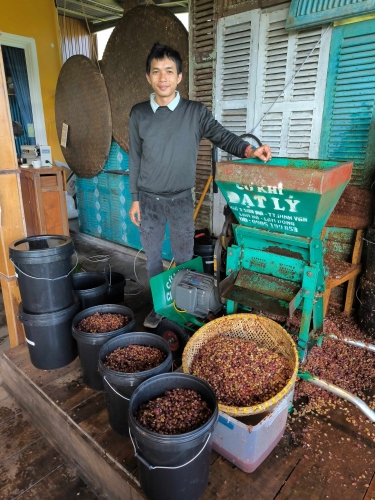
With 1‑ton/hour capacity, it transforms ripe cherries into beans for Honey and Washed processing. Visitors can witness the first step of coffee’s journey and learn how cascara and compost close the loop of sustainability.
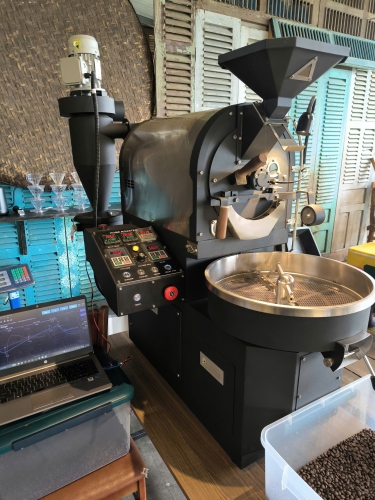
At HuyEco Coffee & Culture in Da Lat, our 1.5kg gas‑powered roaster transforms green beans into specialty coffee. Each batch is carefully controlled to highlight the unique flavors of Arabica and Robusta, while coffee husks are recycled into compost — closing the loop of sustainability. Visitors can watch the roasting process, smell the aroma, and taste the transformation during our eco‑friendly coffee tours.
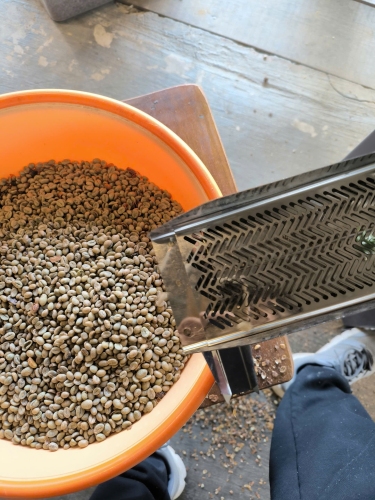
Discover sustainable coffee in Da Lat at HuyEco Coffee & Culture. See hulling machines in action, learn how husks become compost, and experience eco‑friendly tours rooted in local culture.

Explore sustainable coffee farming in Da Lat with local K’Ho farmers. Learn how organic compost, soil health, and eco‑friendly practices shape Arabica and Robusta coffee. Join HuyEco Coffee & Culture to experience farm‑to‑cup sustainability.
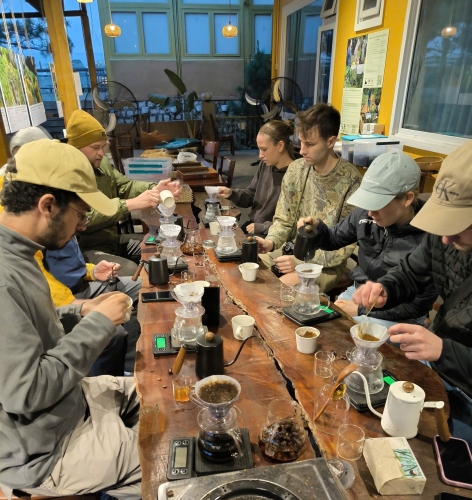
Enjoy specialty coffee at HuyEco Coffee & Culture near Da Lat center. Visit our café, explore the coffee museum & exhibition, and taste Arabica & Robusta from sustainable farms.
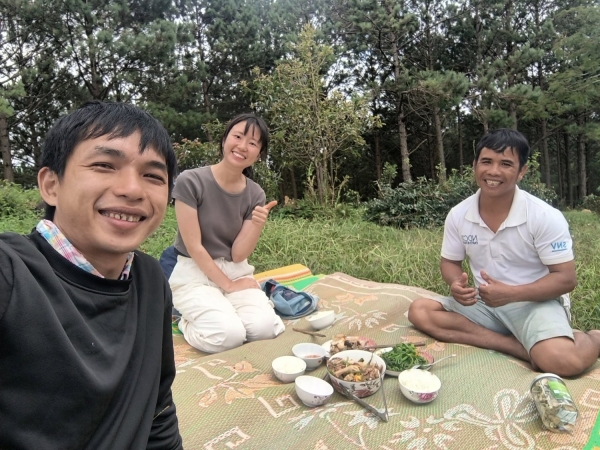
Discover the story of farmer Cường in Da Lat, Vietnam, and how Huyeco partners with smallholder farmers to grow Arabica coffee sustainably — without chemicals, with compost, and with deep respect for local culture
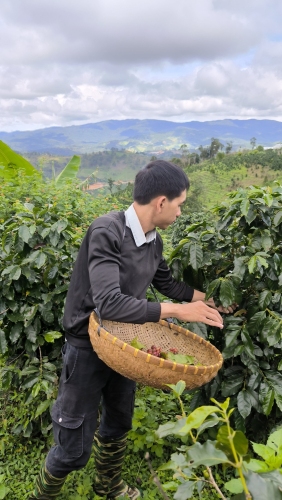
Discover HuyEco’s 2025 sustainable coffee plan in Da Lat — featuring ripe cherry picking, honey processing, ethnic farmer partnerships, and zero-waste Cascara tea. Transparent, ethical, and climate-resilient from farm to cup.
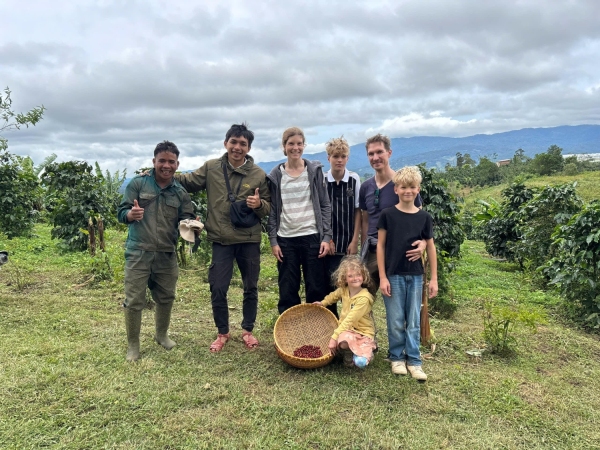
Join our half-day coffee tour in Da Lat and explore sustainable farming, biodiversity, and local culture. Learn how Arabica and Robusta are grown, harvested, and roasted with care — from soil to cup.

Explore Vietnam’s most authentic coffee experience in Da Lat. Join HuyEco’s farm-to-cup tours, taste organic beans, and learn about sustainable farming directly from the grower.

Explore the real-life challenges and hopes of coffee farmers in Da Lat. From strip-picked commercial harvests to raised-bed drying and chemical-free ecosystems — this story reveals what sustainable coffee truly means, and why HuyEco is committed to making it possible.


